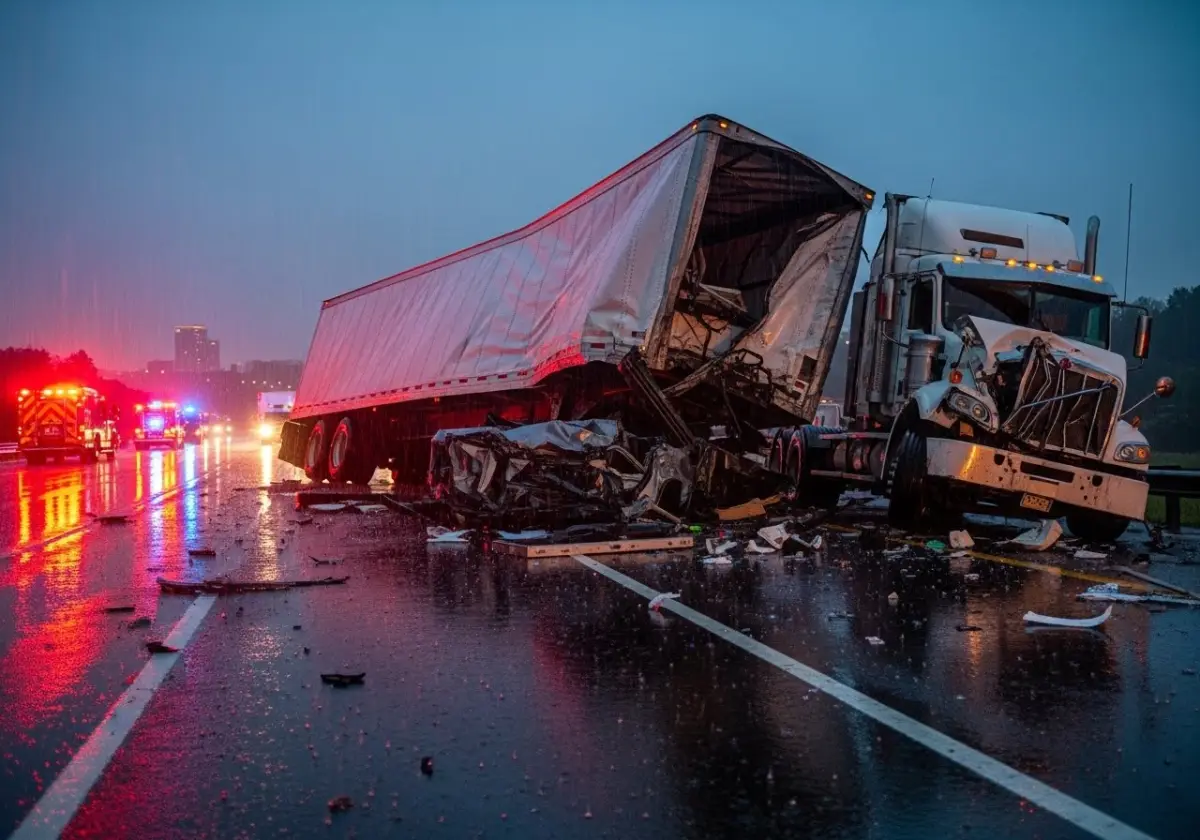
Physical damage insurance covers your own equipment, the tractor and any trailer you own, against collision, fire, theft and similar losses. Cargo insurance covers the freight you haul for customers if it's damaged, lost or stolen in your care. They protect different property, they're required by different parties (lenders for physical damage, brokers and shippers for cargo), and neither is the federally required liability coverage.
What does physical damage insurance cover?
Physical damage pays to repair or replace your own truck and trailer. It usually comes in two parts:
- Collision: damage from hitting another vehicle or object, or from an overturn.
- Comprehensive (or specified perils): fire, theft, vandalism, hail, flood, hitting an animal and other non-collision losses, depending on the form.
Each unit is listed with a value, often a stated value, and has a deductible. Physical damage doesn't pay for damage you cause to other people's property; that is auto liability.
What does cargo insurance cover?
Motor truck cargo covers the customer's goods while they're in your possession: damage in a crash, fire, theft of the load, and other covered causes, up to the policy limit and after the deductible. The commodity list, limits and exclusions decide what's actually covered. Read more in do I need cargo insurance, and what does it cover.
How do they compare side by side?
| Physical damage | Motor truck cargo | |
|---|---|---|
| Protects | Your tractor and owned trailers | The customer's freight |
| Who usually requires it | Lenders and lessors | Brokers and shippers |
| Federally required? | No | Only for household goods carriers (BMC-34 filing or BMC-83 bond) |
| Priced on | Value of each unit, deductible, driver and loss history | Commodities, limit, deductible, theft exposure, loss history |
| Common add-ons | Towing, rental reimbursement, custom equipment | Reefer breakdown, higher limits for specific loads |
What happens in a crash where both apply?
Take a single-truck rollover with a load of building materials. Auto liability responds to damage you caused to others, such as a guardrail or another vehicle. Physical damage pays to repair or replace your tractor and trailer, less its deductible. Cargo pays for the damaged building materials, less its deductible and up to its limit. Each coverage is separate, and so is each deductible. If you don't carry one of them, that part of the loss is yours.
How is a claim paid under each coverage?
A physical damage claim is about your own property. You report the loss, an adjuster inspects the truck or trailer, and the insurer pays for the repair or, in a total loss, typically the lesser of the stated value or the actual cash value, minus the deductible. If the truck is financed, the lender is usually listed as loss payee and is paid first.
A cargo claim usually starts with someone else: the shipper, the consignee or the broker files a claim against you for the damaged or missing freight. You report it to your insurer with the bill of lading, delivery receipt, photos and invoices that show the value. The insurer investigates whether the loss is covered and, if it is, pays the claimant up to the limit, minus your deductible. Report both kinds of losses right away; late notice can complicate any claim.
Do I need both?
- Own authority, hauling for brokers: almost always both. Brokers require cargo, and your truck is likely your largest asset.
- Leased on to a carrier: usually physical damage on your own tractor; cargo is normally the carrier's, unless the lease says otherwise.
- Truck paid off and older: some owners drop collision and keep comprehensive or specified perils. Weigh the premium against what you could afford to lose.
- Hauling your own goods (not for hire): cargo coverage for customers' freight isn't relevant, though you may want coverage for your own property in transit.
What if I pull a trailer I don't own?
Neither of these coverages automatically covers someone else's trailer. If you pull a trailer under an interchange agreement or a trailer the shipper owns, you need trailer interchange or non-owned trailer coverage. See trailer interchange vs non-owned trailer.
How do I choose the right values and limits?
- Set each unit's physical damage value close to what it would cost to replace with a similar truck today, and update it as equipment ages.
- Match the cargo limit to your most valuable typical load and your brokers' requirements.
- Choose deductibles you can pay the day after a loss.
- List every commodity you haul, so cargo coverage matches the freight.
Liability, physical damage and cargo together make up most trucking packages. See how they fit with the rest in what insurance a trucking company needs, or compare all coverages.
Frequently asked questions
Does physical damage insurance cover the load?
No. Physical damage covers your own truck and trailer. The freight is covered by motor truck cargo insurance, if you carry it.
Does cargo insurance cover my trailer?
No. Cargo covers the goods you haul for the customer. Your own trailer needs physical damage coverage, and a trailer you don't own needs trailer interchange or non-owned trailer coverage.
Is physical damage insurance required?
Not by FMCSA. Your lender or lessor will require it on financed or leased equipment, and without it you pay for repairs or replacement of your own truck yourself.
What is stated value on physical damage?
Many truck policies insure each unit for a value you state when you buy the policy. In a total loss the insurer typically pays the lesser of that stated value or the actual cash value, minus the deductible, so keep the stated value realistic and up to date.
Can one accident trigger both coverages?
Yes. In a rollover, physical damage can pay for your truck and trailer and cargo can pay for the freight, each with its own deductible. Liability then covers damage you caused to others.
Sources
- 49 CFR 387.9 – Financial responsibility, minimum levels (eCFR) – accessed Nov 7, 2026
- 49 CFR 387.303T – Security for the protection of the public: minimum limits (eCFR) – accessed Nov 7, 2026
Coverage depends on the policy terms; this is general information, not advice.
Want a quote for your operation?
Tell us about your trucks, drivers, lanes and cargo. GuildRoad Insurance Agency shops trucking markets and explains the options in plain language.
Start my quote